Saturday, February 25, 2006

Aubrey Miles Prosty Free Watch Movie

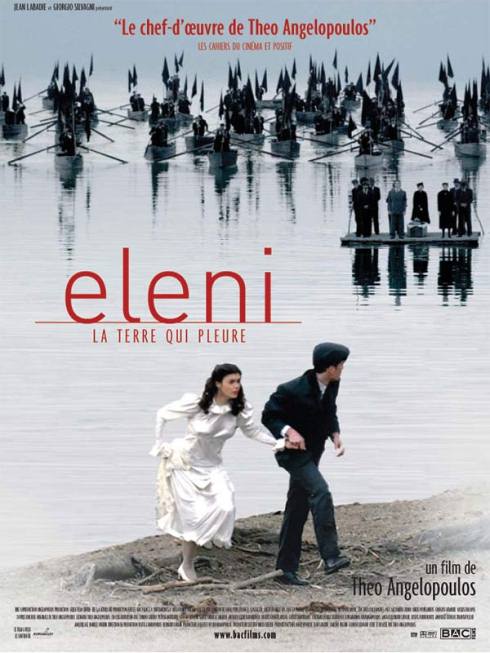
ANGELOPOULOS # 04 - Eleni (2004)


The director / author who has built his reputation is a man, a priori, lucky. You can afford to shoot a film of 200 minutes on (say for example) the path of a storm over a small town in the mountains of Tibet, and all followers of his art shall clap their ears. Video artists, experimental figures, cornucopias literary or cinematic, cupro of culture that are based on their own style and seem to respond to their particular obsessions. The problem arises, perhaps, when the director / author chooses to put their feet on the ground and escape their delusions intellectuals to tell a story related to reality, what we might call "true." Some walk the opposite way (especially the Italians Fellini and Pasolini , who began making films neorealist to lead to the excesses of the free film), others manage to make true masterpieces of the everyday (the "True Story" by David Lynch , for example), and other crash miserably.
is the case Angelopoulos.
One of the strangest criticism I heard at summer projections of the Department of Cinematography at the University of Valladolid on the tape was: "It is good if you do not know the films of Angelopoulos . The first two hours are bearable and everything. " And in a way, it could provide the latter and say that indeed, "Eleni" is perhaps more bearable tape the latest study conducted by our Theo. Input has been minimized downtime, has denied the dream detail and has offered us a story that might fit seamlessly within the classical narrative (even in Greek tragedy). Boy-meets-girl, the family opposes a wedding frustrated, war breaks out, etc ... etc ... Of course, there are details authorial (space-time games that Angelopoulos Bergman learned, and learned that Strindberg ), there are lengthy sequence shots and details of some "magical realism" too light that can meet to the uninitiated.
But that does not work to maintain viewer interest during the two hours (long) duration. Nor does the example of "historical movie" as long as the intricacies of the immigration of Odessa, the revolution of association or the Greek backdrop of World War II disappear in a morass of preciousness and beauty, a set of topics that we never have seemed more forced in European cinema.
If in the previous post we asked for the pretentiousness of the director and yes, maybe now would be time to ask: Angelopoulos be exhausted? And save a most uncomfortable silence. The principal error was not to repeat its flat structure, sequence, or play with the usual imagery of his films, or provide (roughly) what you expect from "a film by Theo Angelopoulos ." The error has been director, almost certainly, down from the world of ideas to the world of classical narrative, detached from the social fantasy that filled his works to be located in a stream of "hyper hiperestético" that hyper- fails miserably.
And these are not the only problems on the tape. The absolute genius of the first 15 minutes is also a liability. What could have been a fabulous short film (credits included) vanishes into nothing, you lose, it takes inside of a tape that does not meet the expectations aroused. And that is very serious. The incredible presentation of an entire town in a sequence shot loses all value as we discover that the director is unable to shape their characters during the next two hours. Who is Eleni, her children, her husband? Where are they? Why put up with this guy? Why the movie is called "Eleni", in fact, when the protagonist is a worthless rehash of the classic tragic women?
A real shame to have to discuss in these terms on one of those nominated for Golden Globe Berlin FIPRESCI winner. But the exercise of the authorial film must follow their rules, one of which is certainly always offer stuff to chew over the audience.

Sunday, February 12, 2006

Who Makes Menards Retaining Wall Block

ANGELOPOULOS # 03 - Ulysses' Gaze (1995)


time ago I began a series of comments on the filmmaker Emir Kusturica that I was half done and what to publish much at full speed. Angelopoulos albeit 'm trying to be a bit more methodical (the streak will not last long, I fear, especially when they have already released gems like Haneke's Cache or Von Trier Manderlay on which I could not " Onanizer " to taste), it is true that today reviewing "Ulysses' Gaze" I discovered a strange link between the two figures. The two ( Angelopoulos and Kusturica) have been, in all likelihood, the best European directors in dealing with the Balkan war, its antecedents and its consequences. Kusturica want to do a portrait of a savage thug full of gypsies Bosnia and orchestras. Angelopoulos want to do a portrait of Greece full of references, pedantic and somewhat culturetilla. That's because Kusturica Angelopoulos is a thug and a pedant, obviously. "Life is a Miracle" (and the fabulous "Underground") is coiled with singular brilliance of the consequences Tito government of the Bosnian people. "Ulysses' Gaze" continues the same way, but the crosses with the count, with the intention of the director talks about making films.
In one comment on "Ulysses' Gaze" that can be found on IMDb reads: "Is director Theo Angelopoulos the most pretentious of movie history?". It's an interesting question, which was launched with a lot of bad blood and a point. But I'll play the madness and I will answer that question with some caution: No, but close. Angelopoulos is pretentious enough to try to adapt the key work of literature (if you can say is a classic "The Odyssey" if is a modern can say "Ulysses" by Joyce ) in the key of a subjectivity that sometimes seems obscene. It's obscene, I want to emphasize, as of a sincerity is disarming. Angelopoulos is portrayed himself in the armor of a Ulysses / Harvey Keitel looking film, crying for her mother, who is lost in the fog of Europe. The film works (perhaps the best director) because their rules are very simple: Créans you what they please, set the images as they please (from outside the film, judging by the many spectators who left room at the time of release) and live in history as they please. "Ulysses' Gaze" takes the metacinematográfica passion hand (for which figures are also passed as Kiarostami, Welles Wilder or, to give three examples) and transferred to a Bosnian war full of magic, film, painful. The character of the old man (Erland Josephson superb ) who collects cans of film while the country disintegrates, broadly speaking, the more poetic portrait of the figure of the film buff that I've seen on a screen. Theo Angelopolous
is (high and still) presumptuous enough to dare to make films for a period exaggerated, an unacceptably slow pace and ideas misty that come and go. On the other hand, is able to make these films work precisely because of his undeniable passion for the image, something I have discussed here. "Ulysses' Gaze" would be perfect for explaining to students of Communication Studies how to build a sequence shot, a fixed plane or parallel editing. It would also be perfect, of course, to demonstrate that distant countries can not make movies that speak to the discretion of the civil wars that are not resolved at the national outburst / nationalist.
Theo Angelopoulos, finally pretentious enough to wipe your ass the golden rule that movies have to last 90 minutes, have about 600 cuts up and be editing easy and digestive enough to be enjoyed by spectators who attend mediocre rooms to talk on the phone and comment tape with the next door.